Categories

Category Strategies

A Dozen Tips for Supporting Kids’ Athletics

soccer character, coolIt is a widely promulgated recommendation that youth spend one hour each day sweating and breathing hard. However, if we think of this exclusively as getting our kid to climb onto a treadmill or a stationary bike, we will probably not reach that goal and torture our kid and ourselves trying. A generally more effective strategy is to engage our child in sports. Moreover, some of the most important lessons in life can be learned on fields of play: it requires effective teamwork to reach most important goals, learning to do things when you don’t feel like it promotes success, learning how and when to use, redirect or suppress emotions promotes effectiveness with others, learning to cope well with injustice and unfairness keeps one from getting derailed, learning to manifest character when someone else isn’t marks high road life and so forth. All of these lessons, and more, can be found in athletics. To facilitate kids learning these lessons, allow me to offer 12 recommendations for adults:

#1: In your heart-of-hearts, which is that place that will come across no matter what you say, try to believe that a good quality effort matters more than a win. I know that there are agenda for which a win is more important (e.g. a coach keeping a paid gig, media attention). But, when it comes to a kid’s development, a win is usually a pleasant but subordinate matter. Moreover, if your lips say one thing but your heart feels another, your kid will often perceive the difference, if only unconsciously.

#2: Offer your time to promote your child’s skill development. Encourage going to dad teaching boy baseballthe field or court or pool or wherever to practice, offering whatever kind help you may. It’s remarkable how mundane these moments can seem in the here-and-now but how critically important and precious they become across time.

#3: If you have objective evidence (i.e., objective ≠ your opinion) that the sport represents a top strength for your child, try to provide additional opportunities or supports (e.g., one-on-one high quality instruction, access to higher quality competitions).

#4: Don’t bug the coach. I think there is a place for sharing relevant information that your kid’s coach may not know, and which could be helpful for your kid’s coach to know. But, provide this information gently, infrequently and only if the coach seems open to it; and, do so less as your child ages as s/he does well to learn the art of effective self-advocacy. Also, try to leave the coach alone regarding strategy issues. It’s a tough enough to coach youth sports without having a parent ask why the runner was sent in the bottom of the 7th when the team was down by five runs.

#5: Listen to your child and provide what s/he needs after a competition. Of mom and daughter shadowcourse, this will vary depending upon how s/he did, how the team did and his or her temperament. Sometimes there is cause for celebration. Sometimes there is cause for empathy. Sometimes there is cause for shutting up and providing space. Rarely is there cause for second-guessing and offering unsolicited advice; such learning is usually best acquired after some time has elapsed (even then, the learning may take deeper root if planted through means other than a parent lecture).

#6: Proportionately and authentically salute the following behaviors: supporting a teammate in victory and (especially) defeat, getting back up after getting knocked down (metaphorically speaking), not displaying frustration when feeling frustrated, remaining polite upon defeating an opponent, appropriately congratulating an opponent who is victorious, not responding in kind to poor sportsmanship, hustling when not hustling might be accepted and displaying selflessness (e.g., helping to clean up, carrying equipment for the coach).

#7: If you’re a parent coach, strive for this goal: try to make it that a stranger watching the competition cannot correctly guess who your kid is or to which kids’ parents you have ties. With younger kids make it about equal playing time, including across desirable positions (as long as no one stands to get hurt or humiliated), even if you’re up against coach ra-ra (most parents will know what’s going on and respect you for a high road stance). With older kids make it about whose performance (including practice behaviors, character and attitude) warrants positioning as you do. In my years of watching, and coaching with and against parent-coaches, it is a small minority who consistently pull this off. And, man, do we parents love you, you small minority!

#8: If you are the administrator of a school sports program, make it against the tennisrules for a coach to accept paid coaching gigs from kids who attend that same district. It’s amazing to me how often this happens and it is wrong, wrong, wrong.

#9: On the sidelines, only make encouraging remarks to players, and try to think of such as a spice: a little is nice, too much draws attention to the spice and away from the main course. (I attended a baseball season once where a mom incessantly rang a cowbell throughout the baseball game. You know that song “50 Ways to Leave Your Lover?” Well, the parents on the other team collectively scripted “50 things you can do with….”). It is also elegant to compliment a kid on the other team for good performance.

#10: Try to avoid yelling critical remarks to coaches and officials. Such behaviors often embarrass a child and come across as oafish. And, very, very rare would be the circumstance when it would be appropriate to yell something negative at a player, especially one on the other team (of course). Oh, and this includes yelling something like: “c’mon boys, lets get the defense going!” after a kid makes an error.

"just breathe" in clouds#11: Try to be supportive of other parents by you. Like you, they are probably experiencing large mood swings based on how their kids are doing. It’s often comforting to have another parent make an encouraging or empathic remark. I think it can also be helpful, if you know each other well enough, to talk each other back off of cliffs. I know of many instances when a drive home was made more tolerable for a kid because another parent helped a mom or dad to embrace a wise perspective.

#12: Encourage your kid, the team and other parents to join you in celebrating and recognizing good coaching, officiating or booster behaviors (e.g., team moms/dads). After a long game, or a long season, a few authentic and kind words or a simple artful gesture can mean a great deal to the adult(s) while simultaneously modelling an important life lesson for your kid.

Oh, and, IMHO, practicing these strategies makes watching youth sports more fun. And, for me, at age 54, it’s becoming more and more about what’s fun!!


 

10 Times Shutting Up Can Work

Man covering mouthSome parents err on the side of engaging too little while others too much. I suspect that most reading (or writing) a parenting blog are not susceptible to the former. So, I’m writing this for the latter group of we parents who may be inclined to overengage.

Here are 10 instances when remaining quiet may be the way to go:

• Your kid has experienced a difficult outcome and indicates that s/he doesn’t want to discuss it. Our kids generally know that we are interested and willing to discuss what is bothering them. But, sometimes they cope by not discussing a hurtful event. Not discussing their pain can be challenging for us as we are hurting too. But, sometimes our child just needs time and space.

• Our child is dug in on a position that we know is not correct but which doesn’t put him or her on a path to a significantly negative outcome in the immediate future. All the time, and especially as they age, our kids assert “truths” that we know are not correct. Often it’s better to just let it go than to engage in a game of one-upsmanship.

• A younger child is being earnest while stating something funny. Laughing in these moments can seem dismissive. Better to bite our tongue or to try to think of something serious (not always possible I know).

• A teacher makes an error with our child. Compromising our kid’s teacher’s teaching character frustratedauthority is kissing cousin to compromising the other parent’s authority. It’s usually better to either coach our child about how to respond (i.e., to teach an important life skill) or, when it seems worth it, engage the teacher directly. (Search with the word “teacher” on this blog for related tips.)

• A coach or extracurricular supervisor makes an error with our child. This may be more likely to happen when the coach/supervisor is a parent of another child who is likewise engaged. However, the same principle goes. (Search with the word “injustice” on this blog for related tips.)

• Offering our opinion to a teenager requires tremendous wisdom, at least if our goal is to affect his or her thinking or behavior in a positive way. I’ve found that ending sentences with question marks, instead of periods, increases the odds of success (and it really must be a question, not a statement wrapped in a question). It’s a teen’s job to be independent; part of that can be eschewing unsolicited advice.

dating2• Our child chooses a friend or someone to date that we don’t care for. While you, of course, will ensure that your child is properly monitored, trying to control whom s/he chooses to engage usually creates more problems than it solves. If your child and your family are well, s/he will figure this stuff out with maturation and experience.

• If the other parent is collaborating with your child in a way that is joyful for them but bugs you. Short of this behavior risking significant physical or psychological injury, or consuming resources that will be significantly compromising to your family’s wellness, better to bite your lip than to be a wet rag.

• The other parent is screwing up with your child. To intervene, in front of the child, short of the commission of abuse, is to risk triangulation. This is usually best dealt with privately, if warranted.

• Your child experiences a self-esteem boost from an inaccurate interpretation. child in a snow suit happyUnless you have cause to believe that someone else will burst his or her bubble in a hurtful way, or that the belief is immediately harmful, often better to just let your kid enjoy the warm glow.

Wouldn’t it be great if we could take our wisdom flash drive and insert it into our child’s hard drive? Oh well, it will still likely all work out okay anyway, or so I keep telling myself in the mirror 😉

Six Tips for Finding Your Kid’s Strengths

dance, coolWhile I don’t have the space here to share the statistical theory that supports this assertion, all kids, barring significant brain injury or dysfunction, possess at least one top strength. Using this strength, or strengths, in ways that matter, is a major component of any child developing a sense of personal competence and efficacy, which then heavily influences the development of self-esteem. The problem is that many youth have no idea that they possess such a strength, and have little or no experience wielding it in the world. Below are six suggestions for identifying and promoting your kid’s strength(s).

#1: Just like plants grow their branches around obstacles towards the light, kids’ behaviors will often gravitate towards their strengths. So observe what s/he does when not sedentary. Sometimes these behaviors are on the beaten path (e.g., she likes to shoot baskets) while at other times they are not (e.g., he likes to write poetry), but keeping an eye out can be a very important part of a strength development program.

#2: Consider arranging for your child to complete an online evaluation. These tools generate theories abpuit your child’s top personality strengths, which can then help to point you in a given direction. For example, The Values in Action (VIA) Strength Survey for Children can be taken by youth ages 10 to 18; it is available, at no charge, at www.authentichappiness.com (find it under the tab labeled “Questionnaires”). StrengthsExplorer For Ages 10 to 14: From Gallup, the Creators of StrengthsFinder is a book that includes an access happy aa boycode to an online assessment tool; it is designed for ages 10 to 14 (older adolescents may take StrenthsFinder 2.0; a 10th Grade reading level is required). However, be careful to not view these reports as tablets coming down the mountain. Such tools are most helpful when they are used to develop theories about your child’s personality strengths.

#3: If your child has identified a top strength, try to put it into action. The more s/he uses it the more resilience will accrue to him or her, among other benefits. Also, there are few moments that are more joyful in parenting than observing your child wield a top strength.

#4: While (of course) there is nothing wrong with engaging an activity that isn’t a top strength (or else I would have to quit golf), it would generally be a good idea to look for independent confirmation that the skill at hand is a top strength before sacrificing significant 2 happy teens, african-americanfamily resources on its altar. We parent-lunatics are often not the best appraisers of our kid’s strengths. So, seek feedback from experts that are willing to be straight with you before investing in it to a degree that hurts; also, keep in mind that experts who stand to benefit financially from a positive review may sometimes not be objective. Of course, if the strength involves participating in competitions, how your child does in those can also tell you a lot, especially as your child competes beyond a local level.

#5: We should be mindful of the costs that can be involved with pushing too much or too little. Once we find our child’s top strength, it will need to be cultivated if it is to flourish. Sometimes this cultivation necessitates engaging activities that don’t feel fun to our child or which require discipline. As is the case so often in parenting, we do well to strive for the middle ground. Too little engagement on our part and our child may not develop his or her ability to do things when s/he adaptdoesn’t feel like it or develop the strength at hand. Too much engagement and our relationship can become conflict laden and our child may come to despise the activity. Of course, finding this middle ground isn’t always easy as it usually moves as our child matures or regresses, making listening and adaptation very important.

#6: If you’d like tailored help for this consider seeking out the services of a qualified child psychologist. For a referral, click here.

Good luck helping your progeny to soar!

Limiting Access to Technology in the Home

baby at computerAs summer approaches, and kids have much more free time, many parents have questions about whether they should limit their kids’ access to technology. This entry considers some of the salient issues.

The American Academy of Pediatrics recommends that parents limit their kids’ sedentary electronic pleasuring to two hours a day. I believe this guideline is well reasoned for at least five reasons:

• Using more of this technology can reduce the odds that a kid will sweat and breathe hard for 60 minutes a day, which is another broadly promulgated guideline.

• Using more of this technology can reduce the odds that kids will advance their face-to-face people skills.

• As is the case with just about too much of anything, too much usage of technology can worsen pre-existing vulnerabilities (e.g., mood disturbance, anxiety disorders).

• Being plugged in too much can reduce the likelihood that a kid will develop his or her top strengths (the topic of next week’s blog entry)attractive college student sitting

• High school students who aspire to be competitive for admission to high quality academic institutions do well to use the summer to work at internships, to do community service or to engage in activities that will put them into the running for these more difficult to get into schools. Obviously, being plugged in too much at home reduces effectiveness along these lines.

There are a few related questions that come up from parents:

I can’t control what my kid does when I’m not home. How can I enforce such limits?

First of all, a scheduled kid is a kid who isn’t as much in a position to defy such rules. But, if you need to resort to it, there are plenty of tools available to assist. For example, you can purchase devices that lock onto the ends of plugs or which turn electronics off after a pre-programmed amount of time (e.g., see www.familysafemedia.org).

How important are rating guidelines?

child playing with laptopI believe these guidelines are very important to follow, unless you have a good reason to do otherwise. Of course, your progeny will likely lament that hordes of his or her peers use this or that game, watch this or that movie, or otherwise consume material that violates such age/ratings guidelines. Comfort yourself with the knowledge that while not all parents who hear such complaints are effective, just about all effective parents hear such complaints.

My kid is way more tech savvy than me. How can I hope to establish and enforce parental controls and guidelines?

If you Google “parent controls” together with whatever device you’re dealing with you will likely find help (making sure to have the right model/software version). Otherwise, offer a 20-something person an Amazon gift card if s/he can check your controls for you; tell him or her that you’ll double the value if s/he is able to get around your controls, show you how s/he did it and offer countermeasures. I don’t find that this needs to take much time.

Should I be checking my kids’ emails, texts and pictures?

First of all, it’s your kids’ job to promote his or her independence and to become R1very upset when you check such things. But, there is evidence that when s/he believes that you might check his or her technology, at any time, that the resulting apprehension can increase the odds that s/he won’t go over to the dark side.

The best suggestion I have is to try to stay in the middle ground, which is a moving target. Too far to the right and you’ll be too monitoring and restrictive: signs of that are that you’re acting like a warden, your kid is acting like an inmate and s/he is becoming socially isolated. Too far to the left and your kid is either stepping on land mines or showing sings that s/he is at significant risk for such. Regardless of where you land on that continuum, some degree of checking and monitoring is usually advisable; the degree of this can be determined by your kid’s age, manifested success/failure and vulnerabilities (e.g., a kid struggling with ADHD may need more monitoring). (For more elaborate guidelines and a fuller vetting of the issues please see chapters 3 and 5 in my parenting book.)

What should I do if my plan seems to be not working?

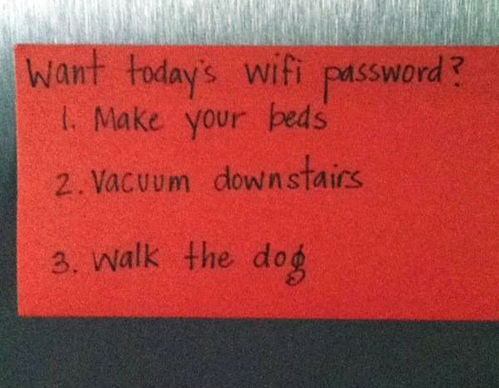
funny-password-signThis one is easy. Seek out expert assistance! For a referral, click here.

Good luck my fellow parent-lunatic!


Teaching Kids Anger Management

parents and young boy in intense conflictA frequent question I get from parents is what can be done to teach a kid how to control his or her anger. This entry reviews six of my favorite strategies.

#1: As is the case with so many issues in parenting, we do well to begin with a gut check. “How am I doing with managing my own anger?” While hypocrisy is an upgrade over disengagement, our credibility is enhanced when we walk our talk. Moreover, if I’m losing it with some regularity, I could be significantly contributing to my child’s problem with anger control.

#2: Also like so many issues in parenting, proactive strategies usually work better than reactive ones. We all lose IQ points when we’re angry (i.e., the more primitive parts of the brain take over), so if I wait until my kid has lost it to do my interventions, my odds of success are not great, and I may end up loosing it as well. I do better if I think ahead and imagine which situations could be challenging and prepare my child (and me) with a plan.

#3: Anxiety and anger are incompatible with a relaxed body. The first step to doing this is to belly breathe (instead of chest breathe), comfortably but deeply, both in and out. With anger and anxiety, the breath rises up and becomes shallow. With peace and relaxation, the breath drops and becomes deeper. The next thing is to relax all of the muscles. The metaphor I use is to try to turn each muscle into a cooked piece of pasta. I have a free 15-minute audio file that helps a kid build up this sort of muscle memory. You can download it here; strive to have your kid practice it three times a week until s/he is able to relax his or her entire body effectively and instantly.

#4: A useful cognitive approach is to try to move the focus of attention away from angry kidthe agitating agent or situation. Sometimes this can be accomplished by separating from the bother (e.g., having siblings separate). Other times this can be done by focusing on a coping or happy thought (i.e., true things that make a kid feel good). Or, it can be done by engaging in something fun or positively engaging.

#5: You can incentivize your child handling challenging situations well. Let’s say your guy is a little league pitcher who tends to lose his composure during games when things don’t go his way. You might tell him that he earns his technology (e.g., video games, cell phone) the next day by not showing negative emotions during the game. Of course, following up with proportionate positive commentary is a nice adjunct.

black mom with kids, white background#6: Try not to let advantages accrue to your child because of his or her temper outburst. If s/he is able to get out of undesirable responsibilities (e.g., chores, homework), gets more attention (e.g., one-on-one attention is most likely to occur during or after a fit) or gets his or her way because of the loss of control, then the frequency of such behaviors may rise, and not necessarily with intention. I would also be very cautious about trying to protect your child from any appropriate consequences that might come his or her way (e.g., a coach wants to bench your kid for a game for having thrown his bat in anger after striking out). It’s good for the anger control problem to not lead to good things (which includes the avoidance of important undesirable activities) and to be associated with developmentally appropriate consequences that sting.

If these strategies don’t work, please consider seeking out a child psychologist. S/he can help you to develop a more elaborate plan for resolving or improving this problem. For a referral, click here.

Using Positive Psychology in Parenting

happy Asian familyPositive psychology (PP) is that branch of psychology that studies what promotes emotional experiences of joy and cognitive experiences of meaning. Instead of asking the question that clinical psychology traditionally asks (i.e., “how can problem x be healed?”) PP wonders, “what can each of us do to feel happy and satisfied?” As parents we do well to both model and teach these strategies to our kids.

Parenting walk and talk are both important. However, the walk seems to matter more. In this context, how happy we are has a great deal to do with how much energy we have for parenting and how often we parent with intention (i.e., doing and saying those things that we most wish to do and say, instead of reacting out of fatigue or pain). Moreover, our kids our affected by our modeling in profoundly impactful ways, and often in a manner that is outside of their awareness The type of world we live in (i.e., mostly happy versus something else) predicts the type of world they live in and the type of world they will live in in the future.

Below are my 10 favorite PP strategies to practice and to teach your kids about:

• Practice gratitude. This can be by way of a daily, weekly, monthly or intermittent practice. This can be an internal event (e.g., counting one’s daily blessings before bed or in the shower) or a specific exercise (e.g., writing a gratitude letter).

• Practice acts of kindness. The “helper’s high” is an empirically established happy black woman backgroundphenomenon. This can be done in simple ways both with strangers (e.g., paying for the coffee of someone behind you in the drive through) or loved ones (e.g., doing someone else’s chore) or can be more elaborate (e.g., volunteering at a pet shelter, taking a loved one to a vacation spot they’ve been aching to visit).

• Think adaptively. This can involve using coping thoughts to lift your mood (i.e., keeping true thoughts in mind that give you energy) or thought testing to reduce the impact of painful thoughts that are not true.

• Use your strengths. This supposes that you know what your top strengths are. You then make sure to use them on a regular basis, preferably weaving them into your vocational life.

• Be mindful. This involves tuning into the details of the moment of time you are in—and I mean all of the minutia of the moment. Cognitive and affective pain tend to live in the past and the future while peace tends to live in the present.

joyful couple• Live by the crisis = pain + opportunity formula. When hammers hit give them their due (i.e., experience the pain without denial or suppression) but then look for the opportunity that is always there, and to a dose that usually surpasses the dosing of the pain.

• Forgive. Forgiving is like flushing a toxin out of the body. It can also produce profound experiences of meaning.

• Sleep, eat and exercise well.

• Be kind to yourself. If what you tell yourself about yourself were all written out in a book what would the overall tenor be? This strategy includes talking to yourself the way you would have others talk to your child.

• Practice the serenity prayer. (You can be an atheist and benefit from this.) This practice combats codependency and helps you to have an adaptive response when you experience injustice. (I’m convinced that the more a person lives a high road life the more that person will experience injustice.)

Want to learn more about these strategies? I have three suggestions:glasses and book

#1: Enter what you want to know more about in the search bar above. I’ve written articles on several of these techniques; some of those blog entries also include suggestions for further reading.

#2: Read my parenting book. I end each chapter with specific exercises for parents from the positive psychology literature.

#3: Sorry, this one is only for people who live by me in Northeastern PA. This June and July (2014) I will be running an 8-session happiness seminar. To learn more, visit www.explorehappiness.com.

Good luck!


Spicing up the Romance

alienation, long termLet’s face it, having kids is a romance crusher. Time for romance shrinks dramatically. Then, when you do MAKE the time, one or both of you is often physically, cognitively, emotionally or existentially exhausted. However, if you give in to that, and don’t think of your relationship as something that requires ongoing and consistent discipline, your odds go up that you’ll be turning your coin over to a divorce attorney. Here are 30 ideas designed to create a good feeling between you (I’ll end with some caveats):

Initiatives for the person with traditional masculine interests

• Get tickets to a sporting event

• Arrange to go bowling

• Go to some sort of racing event

• Take a trip to a casino

• Go target shooting (hey, it’s the road less traveled!)

• Go fishing (yes, you can wear latex gloves if you must)happy latino couple

• Take golf lessons together

• Give him a foot rub (no, you cannot wear latex gloves)

• Learn how to make beer or wine together

• Go to a car or aviation show

Initiatives for the person with traditional feminine interests

• Write her a poem regarding either your love for her or great things about her (no, it doesn’t have to rhyme sparky)

• Take her to get her nails done

• Do her toe nails for her (be nice and slow and meticulous)

• Take a trip to the closest outlet mall to buy her something nice (only positive comments and no fretting allowed)

• Brush her hair for an hour

• Set her up in with a luxury bath while you take care of your smelly progeny–finger food, sweet aromas and gentle music are all pluses

marriage in progress• Take her to get her makeup done, letting her know that she never needs such things when it comes to you

• Arrange to go dancing and then, as Souza suggested, do so like no one is watching

• Arrange to chauffeur her and her friends for a girls night out (man, you’ll learn all kinds of stuff!)

• Hand carry her flowers to her work

Either

• Set up a picnic in the park

• Go to wineries for tastings

• Offer an hour massage

• Write and deliver a gratitude letter

• Take a regular walk around your neighborhood

• Make his/her favorite meal and serve it in a part of your residence where you wouldn’t normally share a meal. (it’s amazing how intimate a card table, a simple table cloth and a candle can make any part of any residence…as long as you medicate the children first, or turn them over to some other humans for the night…I’m kidding about the medicating your children part…or am I??)

• Go to a comedy club

• Get a babysitter and do an overnight to a nice hotel, prepping the room first yes i can(e.g., flowers, chocolates, champagne)

• Go horseback riding (what great pictures you can get!)

• Play a round of tennis or some other racquet sport

A few caveats:

• Don’t do anything nice with an expectation for a return or a certain reaction. If you do, the nice gesture could make things worse. Think of this as something good you are doing for it’s own sake, regardless of how your spouse may respond. This REALLY takes discipline and practice.

• Never act like you’re sacrificing yourself for your partner’s sake.

• Don’t act like this is a quid pro quo scenario. For instance, if you’re the one who tends to pursue sex, don’t do so after doing one of these gestures.

• Stay away from any gestures that get you into sensitive areas with your partner (e.g., you’ve complained that your partner never gives you a massage and then you offer one).

• Set a weekly date night. Lots of times you won’t feel like it or be tired. DO IT ANYWAY, most of the time that is. Anything that we do only when we feel like it, or only after life’s obligations have been met, will be half baked.

marriage counseling• If these sorts of interventions seem to worsen things and/or your relationship has gotten toxic, please seek out the services of a qualified relationship counselor. For a referral, click here.

Good luck. And remember this is hard for everyone. After all, at the point in human history when some yuck-a-buck came up with the concept of “till death do you part” people tended to die when they were in their early 30s! 😉

Nine Tips for Deciding Among College Offers

college student in garbThis entry is written for parents of college seniors considering which college offer to take. However, it can be extrapolated to similar situations.

First of all, congrats: your child got into not only one somewhere but–an assumption I’m making because you’re reading this entry–multiple somewheres! Remember how anxious you felt about that? How uncertain? (The metaphor I used with friends was that I felt like an abandoned toddler in a wet diaper, in down town Manhattan.) So, yes, s/he will not have to manufacture meth in a van down by the river in order to survive. Given that, here are some principles for guiding the decision making process the rest of the way.

#1: Take the time and energy to celebrate! It’s so easy to rush and to move on to the next hurdle. As the hurdles never end, take a break from the race and savor. Your baby did it!!

#2: Decide what money you are prepared to offer to fund your child’s college. Perhaps you are willing to fund any of the choices. If not, front load this in the conversation: “Becky, as we consider our choices, lets keep in mind that we (parent, parents, grandparent, etc) can fund X a year. So, if your choice’s tuition is over that we (as in Becky also) would have to have a viable plan in place for making up the difference before sending in a deposit.” Your prospective college student may still be thinking like a child: this is mom and dad’s problem to solve. If so, you may need to grow him or her up quickly in this regard.

#3: Don’t be shy about being in touch with the financial aide office of the money held by handinstitution(s) for help if what they are offering is short of what you can afford, especially if you have cause to believe that they look upon your child as a desirable applicant. They can also be a wonderful source of information regarding private scholarships and other sorts of funding options that may be available, as can your child’s high school guidance office.

#4: Listen and provide empathy before sharing your perspective. For the rest of your child’s life, this will usually be an ideal opening position. And, don’t rush getting to your perspective, even over the course of days or weeks. Of course, don’t avoid getting there either. (Don’t worry too much if you falter with this sometimes It’s more about the earnest effort to pull it off more than it is about batting 1.000.)

#5: Consider another visit to your child’s top choices. You’ve likely already been to the campuses but a re-visit, from the lens of this decision, can be very helpful. Try on this visit to have a deeper experience (e.g., attending a lecture in the planned major or in a required course, arranging for your child to stay overnight). Many institutions have such days planned for those students to whom they’ve made an offer. If your institutions doesn’t, ask. And, don’t be shy about asking if they’d be willing to cover your costs as well (some even offer this up front).

character checking off checkboxes#6: Search for information from people in the know about the institutions your considering.

#7: There are almost an endless stream of data points to consider (e.g., who has the better library, the better athletic facilities, the number of faculty with this or that distinction) and families vary wildly in terms of who prioritizes what. However, one stat out there that can be helpful in this context is the freshman retention rate. This statistic regards the number of freshman who become sophomores at that institution, which is a general measure of student/family satisfaction and institutional effectiveness. While this number generally looks high across institutions, the ones you are considering may have some notable differences in this statistic. (You can find this statistic and US News and World Reports’ website that ranks colleges.)

#8: If you’re “lucky” (I think it was Thomas Jefferson who first noted the connection between working hard and luck), the decision-makes will ultimately all have the same opinion about which offer to accept. If not, things can get very tricky. My default suggestion would be to defer to your child’s decision. S/he either is a legal adult or is about to become a legal adult (I know, a tough idea to wrap your mind around…or at least it is for this dad), so s/he will the one to experience the good, the bad and the indifferent consequences of this decision. It seems to me that it wouldn’t be fair for him or her to be in the position to experience any potential qualified or poor outcomes based on someone else’s perspective, no matter how well reasoned and intended. Keep in mind that this recommendation supposes two things are true: you’ve made all of the relevant data available to your child, including the opinions and reasoning of adults involved, and you are respecting your own boundaries regarding how much money you will be investing.

#9: Once the deposit has been sent in, and the decision made, try to avoid mentorsecond-guessing…forever, even in your own mind. Second guessing with your child risks generating significant tension between the two of you. Second-guessing in your mind is like chewing on glass. You did due diligence. You put all the resources you could into the decision. That’s all anyone can do. So, either enjoy your wisdom (i.e., evidence that the right choice was made) or practice the Serenity Prayer and let it go.

My first-born daughter is a senior who got offers from several institutions that she adores. So, I’m living with this issue these days as well and know it ain’t easy!

By the way, are any of you, who are also parents of first-born seniors, also wondering how the heck you’re going to get through having your baby move out? We all need a support group!


Treating Anxiety in Youth: CBT, Medication or Both?

anxious teenAnxiety disorders in youth are common; between one fourth and one third of teens develop one by the end of adolescence. Examining treatment issues with this population, the landmark Child/Adolescent Anxiety Multimodal Study (CAMS) just published its 24 and 36 week outcomes (i.e., article dated 3/2014). This multisite study, that included 488 children aged 7 to 17 (average age of 10), compared cognitive behavioral therapy (CBT; a talking therapy) to sertraline (SRT; an SSRI medication), to both together (COMB), to pill placebo in the treatment of Generalized Anxiety Disorder, Social Phobia and Separation Anxiety Disorder. (Youth with other anxiety disorders, or with co-occurring problems such as depression or pervasive developmental disorders, were not included.) I will first review some key findings and then suggest some take home points for clinical practice.

• At 12 weeks, or the immediate conclusion of the study, this is the percentage of children who were rated to have a positive treatment response across the four conditions: COMB: 81%, CBT: 60%, SRT: 55% and pill placebo: 28%. At that point in time the combined treatment was determined to be moderately superior to the other three conditions.

• At no point in the study were there statistically significant differences between the CBT and medication treatment conditions.

• At week 24, the superiority of combined condition over medication alone and anxious childCBT shrank (COMB: 81%, CBT: 69% and SRT: 68%).

• At week 36, the superiority of the combined condition over medication alone and CBT shrank further (COMB: 83%, CBT: 72% and SRT: 70%).

• For both of the preceding two points, the magnitude of the differences at week 36 varied across the various outcome measurements.

• Quoting the authors: “…only 5% of youth receiving COMB and only 15% to 16% of those receiving monotherapy failed to achieve responder status at any point during study participation.” And, “although COMB appears best for prompt benefit, all 3 treatment conditions appear beneficial at 6 months.”

Take home points for clinical practice

therapy etchingThese results support what I, and many of my child clinician colleagues, have tended to recommend in the treatment of youth suffering from one of the aforementioned anxiety disorders. These recommendations are as follows:

• If wanting the most aggressive approach, consider medication therapy and CBT.

• If concerned about adding a psychoactive agent to a developing brain when there may be viable alternatives, consider starting with CBT alone unless the anxiety symptoms are in a severe range (e.g,, a child cannot get to school), to see if the talking treatment will be sufficiently effective.

• If a child is taking a medication, consult with the prescriber about the possibility of tapering off the medication once the CBT skills have been learned.

• It would usually not make clinical sense to treat a child with medication alone, though unusual circumstances could suggest otherwise (e.g., CBT is refused or not available).

• The CBT protocol used in this study was the “Coping Cat” program. However, other established CBT programs for children would likely also have value.

• The authors note that their results are similar to the results found in treatment therapy with teenstudies of juvenile depression. This suggests that similar clinical guidelines may also apply in the treatment of youth suffering from juvenile depression.

To read the abstract for this study, click here.

For a referral for mental health care, click here.

For an article on affording mental health care, click here.

I’d like to offer a closing thought for those parents who have a child or teen suffering from an anxiety disorder: in my clinical experience this is one of the most treatable kinds of problems that a kid can have. So, I strongly encourage you to take your child or teen to a mental health professional who can delivery quality care (for a more thorough review of what good mental health care looks like, please see Chapter 10 of my parenting book). After all, why have your baby suffer needlessly?

Tune in next week when I will post an article that describes cognitive behavioral therapy.

Eight Tips for Responding to Bedwetting

enuresis2Bedwetting, or nocturnal enuresis, is very common in children. Indeed, it isn’t diagnosed by the International Classification of Diseases until age 5 and witnessed in about 12% of kids even by age six. Here are eight tips for when it has become a problem for you and/or your child:

• The most important thing is to stay calm. It’s almost for certain that the bedwetting is not under your child’s control (e.g., in my 20+ years of practice I’ve never seen a kid who was wetting the bed on purpose). The shame that children sometimes feel over bedwetting can be intense (e.g., Google the story of John Curtis, an Olympian who got his start in running because of shame over enuresis). If you remain proportionally calm and reassuring you reduce the odds that your child will feel shame. (Also remember that excessive reassurances can be problematic as they suggests that you are freaked out.)

• Let your kid know that this is very common and that he or she will grow out of it. Kids tend to think that they are freaks unless someone normalizes this for them.

• Have your pediatrician rule out medical causes. While medical problems are indicated in only about 3% of these cases, you’d hate to miss one if it’s there.

• Have your child either help you change the sheets or have him or her do so on enuresishis or her own (this depends upon your child’s age). This should be done as soon as you learn that the bed is wet, even if it’s in the middle of the night. This mild inconvenience, that doesn’t promote shame if done calmly, helps to program your child’s body to wake up before wetting the bed.

• Establish a star chart for having a dry bed. A dry bed earns a star and praise. A wet bed earns either no response, or a comment like “don’t worry about it,” or “lots of kids go through this” or “it’s okay, we’ll try again tonight” or “hey, no one gets a hit every trip to the plate.” Establish a reward after a certain number of stars have been earned (e.g., 7 might earn going to the movies, 14 might earn a video game). In no way shape or form should there be any punishment or restriction of privileges secondary to your child’s performance with the star chart.

• Restricting fluids before bedtime is sometimes recommended but I would only do this in the short-run as part of the goal here is to mature your child’s bladder capacity. I also wouldn’t deny a small dose of water to a child who is begging for a drink.

375px-DRIsleeper-Wireless-Alarm• A bell and pad alarm system can be very helpful (these are easily found online). The alarm sounds when a tiny bit of moisture is registered. The idea is to condition your child’s body to wake up. Make sure your child goes to the bathroom when the alarm sounds, as some sleep so deeply that the alarm will not wake them. If the problem persists create a word of the day and make your child wake up enough to state it. (Again, it’s important that you try to stay calm, which I know can be a challenge in the wee hours of the morning.)

• If these simple remedies do not work, consider taking your child to a child psychologist who can offer “Full Spectrum Treatment.” FST is a more elaborate, research supported, behavioral treatment for enuresis. For a referral click here.

Good luck!