Seven Tips for When Your Child Refuses to Do a Chore

What’s a parent to do when a child resists doing a chore? In this post I offer seven tips for dealing with such a situation. These tips are premised on three assumptions:

  1. The chore is age appropriate and skill appropriate for your child. Said another way, the task is within your child’s reach to complete.
  2. Your child is not suffering from an untreated psychiatric problem. If a child suffers from depression, anxiety, bipolar disorder, or another diagnosable mental health disorder he or she may need interventions that are more sophisticated than what’s indicated below.
  3. Your child’s resistance to the chore is not in response to someone else’s psychiatric problem (e.g., someone acting in an abusive fashion, someone abusing alcohol, etc.).

Tip #1: Make it clear what you expect. Your idea of a clean room and your child’s idea of a clean room may be very different. One way to avoid this problem is to write down on an index card what effective task completion looks like. For instance, a clean room = bed made, all clothes put in their place and all food particles/dishes out of the room and either in the trash or the dishwasher (for pre-readers this can be indicated with pictures). It’s also a good idea to put down how long you expect it to take for your child to complete the task.

Tip #2: Don’t make it sound like you’re asking for a favor. “Colin would you Puhleezzee take out the trash just once this week without a hassle?! Puhleezzee!” sounds like I’m asking for a favor, and we all get to say no to favors.

Tip #3: When giving a command make eye contact and use as few words as possible. If my child is watching TV, or I’m issuing a command from another room, the odds of compliance go down. Moreover I facilitate the escalation of anger and resistance if I start lecturing in these moments.

Tip #3: Establish a reward.  In the mildest cases of non-compliance your praise for a job well done may be sufficient. If that doesn’t work you can make your child’s access to a privilege contingent upon having done the chore properly. “Jaden from now on you earn the privilege of watching TV by doing kitchen duty.” After having done the chore multiple times in a row a bonus can be offered (e.g., a game rental, a trip to an ice cream shop, etc.).

Tip #4: Give your child the opportunity to control aspects of the task. “Peter which day of the week would you like to pick up the dog’s poop off the lawn?” “Brooke do you want to take your shower right after dinner or right before bed?” “Claire do you want to rub my shoulders before or after you rub my feet?” (Just kidding on that last one…or am I?)

Tip #5: Give a warning that the task is about to be due. “DJ I know you’re into your video game but in 15 minutes I’m going to need you to stop and pick up your toys and put them in their place.”
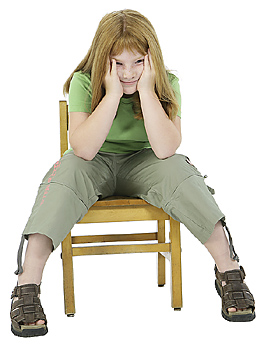
Tip #6: Use time out if the reward is not sufficient. If your child resists doing the chore after you’ve given three commands to do it (issue the threat of time out when giving the command the second time), have her sit in a hard chair for a minimum sentence of one minute for each year she has lived outside the womb (don’t let your child know what the minimum sentence is). After the minimum sentence has elapsed your child can get out if she is sitting there quietly and she agrees to do the chore. If either or both conditions haven’t been met, and without announcing that you are doing so, cylce through new periods of minimum sentences until your child is sitting there quietly and agrees to go do the chore.

Tip #7:, Seek out help if your child has a persistent patter of non-compliance, that is not responding to your best efforts. For a referral for a provider near you click here.

Mental Health Blog Party Badge

Communicating with Teens about STDs

My various jobs call for me to read on a regular basis. However, there is only one book I’ve read that felt so important to my parenting mission that I interrupted my own reading of it and asked for my two teenagers to read the first chapter. That book is Seductive Delusions: How Everyday People Catch STDs by family practitioner Jill Grimes, M.D.

The national survey data on youth sexual behaviors indicate that teens frequently have sex, and in ways that put themselves and their partners at risk. For instance, the CDC’s most recent edition of the Youth Risk Behavior Survey, indicates that 46% of high school students have had sexual intercourse (African-American youths reported the highest rates at 65%), with 34% reporting that they are sexually active and 14% indicating that they have had sexual intercourse with four or more different partners. Moreover, 39% of teens reported that they did not use a condom the last time they had intercourse, though 22% did use drugs or alcohol.

The results of these behaviors can range from unwanted pregnancies (e.g., according to the CDC there were 409,840 infants born to girls ages 14-19 in 2009) to the contraction of a (sometimes life-long) sexually transmitted disease (e.g., quoting from Dr. Grimes’ book: “Estimates vary, but between 50 and 90% of adults have oral herpes by age 50…25% of adults have genital herpes, but up to 90% of them are unaware of it.”) I do my teen no favor if I think that she or he could never be one of these statistics.

Giving teens real life stories of peers and young adults suffering from STDs can be one effective way of reaching them about these matters, especially when those stories poignantly review the long term, embarrassing and inconvenient realities that can follow from even a brief lapse. That is what makes this book so important. The stories are effectively organized by type of STD and include facts about each disease at the end of each chapter; the reviews of the book have also been stellar (e.g., see amazon.com). I encourage you to review it yourself and see whether you might want to recommend it for your teen (or older) child. (Please also stay tuned to this blog as Dr. Grimes will be doing a guest entry for us sometime later this month or early next month.)

Happy People Live Longer & Have Better Health

Earlier this year researchers Drs. Ed Diener and Micaela Chan published a comprehensive review of the scientific literature examining the association between subjective well being (SWB; the research term for happiness), longevity (as in length of time someone is alive) and health. To get an electronic reprint of the study click here. In this blog entry I will summarize some of their findings and suggest one evidence based strategy to promote happiness.

In considering the positive and significant association between longevity and SWB the researchers reviewed 26 longitudinal studies (a study that follows subjects over an extended period of time, usually decades). These studies cumulatively examined 316,911 individuals. In the “Take-Home Message” portion of the article the researchers write: “If high SWB adds 4 to 10 years to life compared to low SWB, this is an outcome worthy of national attention.”

In considering the positive and significant association between health and SWB the researchers reviewed 17 longitudinal studies; these studies cumulatively studied 121,096 people. Quoting the researchers: “…moods and emotions are consistently…associated with…blood pressure, cortisol, and inflammation, as well as indicators of disease such as artery wall thickening…(this) occurs in addition to the effects of negative feelings and depression, suggesting that positive affect may have distinctive biological correlates that can benefit health.”

There are many things adults can do to promote happiness. For instance, in an earlier blog entry I described a family exercise involving writing gratitude letters. Another strategy is to practice acts of kindness as the “helper’s high” is scientifically validated phenomenon. To do this make one day a week your kindness day (maybe one that has traditionally been a struggle). Here are 10 ideas to get you started:

• Write a thank you note to a person who cleans a space that you routinely traverse.

• Leave some money at a drive through for the customer behind you.

• Take out an add in a local newspaper recognizing a teacher’s excellent service.

• Stick a couple of movie passes in a package of diapers at your local grocery store with a note “I know it’s tiring to take care of a baby. Please use these to lighten the load some night. A friend who has been there.”

• Spend an hour volunteering at a local soup kitchen.

• Put coins in strangers’ meter that looks like it could use it.

• Give blood.

• Invite someone with young kids with her or him to cut you in line at the grocery store.

• Leave a note of appreciation for your mail carrier’s service.

• Bring a box of baked goods in for the office at your child’s school.

I review other ideas for acts of kindness in my book Working Parents,
Thriving Families: 10 Strategies that Make a Difference
. I’d also very much like to hear ideas from you, my reader 😉

Why a Mother Might Kill Herself and Her Children

Ms. Lashanda Armstrong, 25, is making headlines as the mother who intentionally drove her van, with her four children, ranging from 11 months to 10 years of age, into the Hudson River in New York on April 13. I just wrote a guest post on the American Psychological Association’s blog, www.yourmindyourbody.com, regarding some of the general issues and questions that may be on people’s minds following this tragedy..

Recent Research: Teens Need Parents to Monitor Them

The purpose of this blog entry is to highlight recent research that demonstrates the importance of parental monitoring.

Teenagers not only have brains that are not fully developed in their capacity to control impulses, but they also often have a sense of invulnerability. This is why survey results of risky behaviors that teens engage are often alarming. An example of this is the Center for Disease Control’s just published 2009 survey of 16,410 high school students in the U.S. These are some highlights quoted directly from the summary document:

• Among the 69.5% of students who had ridden a bicycle during the 12 months before the survey, 84.7% had rarely or never worn a bicycle helmet.

• 28.3% of students rode in a car or other vehicle driven by someone who had been drinking alcohol one or more times during the 30 days before the survey.

• 31.5% of students had been in a physical fight one or more times during the 12 months before the survey.

• 19.9% of students had been bullied on school property during the 12 months before the survey.

• 13.8% of students had seriously considered attempting suicide and 6.3% of students had attempted suicide one or more times during the 12 months before the survey.

• 19.5% of students smoked cigarettes on at least 1 day during the 30 days before the survey.

• 41.8% of students had had at least one drink of alcohol on at least 1 day during the 30 days before the survey.  24.2% of students had had five or more drinks of alcohol in a row (i.e., within a couple of hours) on at least 1 day during the 30 days before the survey.

• 36.8% of students had used marijuana one or more times during their life. 20.8% of students had used marijuana one or more times during the 30 days before the survey.

• 46.0% of students had ever had sexual intercourse. 34.2% of students had had sexual intercourse with at least one person during the 3 months before the survey. Among the …sexually active students, 61.1% reported that either they or their partner had used a condom during last sexual intercourse.

In a subsequent blog entry I will summarize the results regarding the poor health habits that teens often engage in. For now, we all do well to institute a monitoring protocol that includes knowing, and approving of, the answers to three questions whenever our teen is outside of our eye line:

1.     Who are you with?

2.     What are you doing?

3.     What adult or adults are responsible for monitoring? (Keep in mind that effective adult monitoring might occur from another room in the same house, in the parking lot of an event, or in a restaurant next door. Of course, it’s also important to confirm that the monitoring adult is responsible and shares your values and attitudes about acceptable activities and behavior.)

Sometimes this can be complicated business. For a more thorough discussion please see Chapter Three of my book, Working Parents, Thriving Families.

A Chronic Health Problem in Teens: a Lack of Sleep

The National Sleep Foundation does an annual Sleep in America Poll. Their 2011 edition, which has the theme of “Communication Technology in the Bedroom” was just published. In this blog I’m going to summarize the findings as they regard teenagers, which the poll refers to as Generation Z’ers.

Almost three out of four teens report bringing their cell phones into their bedrooms at night, with 56% texting every night/almost every night in the hour before bedtime. This is concerning as those who text in this hour are less likely to say they got a good night’s sleep, less likely to wake up feeling rested, more likely to be characterized as sleepy the next day and more likely to drive drowsy.  Moreover, 28% percent of teens leave their cell phone ringers on at night and 18 percent report being awakened by incoming transmissions. Finally, when they wake up at night 35% of teens report that they will text.

The poll also found, as has been the case with previous editions of this survey, that our teens are not getting enough sleep.  This year 4 out of 10 teens reported getting less than the minimal recommended dose of sleep each night with 60% stating that they wake up feeling like they had not gotten enough sleep (46% indicated that they rarely/never get a good night’s sleep on weekdays and only 6% endorsed getting a good night’s sleep every school night).  Moreover, among those that drive, 40% indicated that they have driven drowsy.  In total 77% of teenagers reported having sleep problems at least a few nights/days a week (e.g., 34% of teens report taking more than 30 minutes to fall asleep at night).  Despite these problems teens seem to be aware of how many hours a night they need to be rested (i.e., 61% indicated that they need 8-9 hours, or more, to be rested).

The poll also asked the teens what areas are negatively affected the next day when they are tired. These are the areas they indicated become problematic (the percentage endorsing the problem is in parentheses): mood (87%), schoolwork (84%), family life or home responsibilities (73%), and social life or leisure activities (68%). (Please see my previous blog entry that reviews both the negative next-day consequences, for youth, of being deprived of just one hour of sleep as well as the National Sleep Foundation’s recommendations for how much sleep kids should get each night.)

Other findings:

√ More than three out of four teens use their laptops in their bedrooms in the hour before going to sleep. Most of the poor sleep outcomes that are associated with texting in this hour are also associated with this kind of activity.

√ Sixty percent of teens drink caffeinated beverages each day, with one out of four drinking four or more.

√One percent of teens report using an e-book reader in the hour before bedtime.

To review strategies for promoting a good night’s sleep in your child click here. For now the obvious thing to say is that we parents do well to be mindful of how much sleep our teens need as well as what the likely consequences will be if they are deprived of such.

Five Questions for Effectively Parenting Kids in Sports

This past weekend I watched an episode of ESPN’s Outside the lines regarding the suicide of 25-year-old LPGA golfer Erica Blasberg. Certainly this episode resonated with me as a psychologist, as I often deal with these kinds of issues in my practice. But, this piece touched me more as a dad of three kids who play sports (one heavily so). So, I thought I’d devote a blog entry for sharing five questions for a parent to consider when his or her child plays a sport.

1.     As a parent do I insist upon outcomes, effort or both?

I would argue that it is effort that we should encourage and allow the outcomes to fall where they may. The capacity to give effort when one doesn’t feel like it is a very important psychological muscle for promoting success. Thus, common messages relayed in sports along these lines generalize well to other areas in life (e.g., practice well when no one is watching, try your hardest even if your opponent is dominating you and try to improve no matter where you stand relative to other kids). Alternatively, emphasizing the win, the hit, the points, or other outcomes, especially without regard to other important considerations, can promote unwise philosophies, practices and outcomes.

2.     Does my child enjoy the sport?

Sure, there are rainy Mondays and valleys of weariness that all of us experience in the areas of our lives that typically produce joy. But, for at least a considerable portion of the time, is my kid having fun playing the sport? If not, there may be more downside than upside in continuing and/or my kid’s involvement in the sport may be more about my satisfaction than his or hers.

3.     Does the sporting experience support or interfere with adaptive character development?

This question may be especially important for athletically gifted kids. One father I know recently started to lightheartedly ride his athletically talented son for holding back during a rec basketball game (his son was a top player on two very competitive basketball teams but the rec team was made up of boys who played the sport only one day a week); his son explained that he could have scored more points, but not without cutting down on how much he passed the ball to open teammates, something that he thought would have been wrong to do. This is an illustration of how sports can engender and highlight character development.

Alternatively, it is possible for a sport to become a venue for consistent eruptions of anger, verbal or physical bullying, despair and cheating; in such instances, and left unchecked, the sporting life may be doing more harm than good. Relatedly, and as a parent, what is my emotional reaction to each of the following scenarios? Scenario #1: my child turns in a dominant athletic performance that leads to a win for the team, but he or she intentionally shames another child along the way. Scenario #2: my child tries hard but turns in a subpar athletic performance, which then facilitates a team loss, but along the way he or she lifts the spirits of a child who was feeling down. Understanding my emotional response to these scenarios (you know, the one we have when we’re being honest with ourselves and no one is looking) can tell me a lot about what I’m communicating to my child about priorities (either directly or indirectly) and also let me know whether an adjustment is in order.

4.     When academics and sports compete against each other, which wins?

Granted, those of us who value both academics and sports do what we can to keep them from coming into conflict. But, inevitably, when they do, what happens? Can there be any doubt that efforts spent towards becoming a good student stand to leave many more doors open in adulthood than efforts spent towards becoming a good athlete? Moreover, and for those who are playing at a level in high school where this concern is relevant, recruiters are more-and-more disinterested in students with a compromised academic record (i.e., they don’t want to deal the hassles that result when a student they recruit cannot perform academically).

5.     Does my kid realize that my bond with him or her cannot be threatened by how he or she does in sports?

As I review in chapter two of my book, self-esteem appears to be comprised of at least two core elements: of a sense of worthiness (i.e., I have inherent value and am loved) and a sense of competence (i.e., there are important things that I’m good at). Our kids benefit when they know they have a loving bond with us that can’t be severed when they stink at things, make poor choices or otherwise experience negative outcomes. Having this bond is more important than just about anything else we can provide for our child as they grow up.  So, one could argue that just as most sports require donning protective physical equipment, we do well as parents to require that our child dons protective psychological equipment, in this case a sense that his or her connection with us can’t be threatened by a score.

Three Questions to Promote Decision Making Skills in a Child or Teen

Teaching children how to make good decisions is an important task for responsible and engaged parents. However, while we often say to our kids things like “learn to think” and “learn to make good decisions” what we really mean is “figure out what I think and parrot that back to me.” If we do this often enough we increase the odds that our kids will learn to let others do their thinking for them.

One method for promoting independent thinking can be used in moments when your child or teen comes to you with a request that you are inclined to deny. Instead, of just saying no, try asking yourself three questions first:

This thing that your child or teen wishes to do, does it…

1.     …pose an undue risk of physical harm?

2.     …pose an undue risk of psychological harm?

3.     …unduly tax your resources (e.g., time and money)?

If the answer to all three questions is “no” then there could be significant value in saying “yes.”

I’ve witnessed multiple examples of parents being at war with their child or teen over things that were not physically or psychologically harmful and which did not place an excessive tax on the parent’s resources. One dad was at war with his son over the color of his son’s shirts (he believed that the pastel colors his son preferred made him look too effeminate). One mom was cast in the role of warden, and her 17 year old in the role of inmate, because the mother would not allow her daughter to wear lipstick.  In each instance, the behavior the parent was trying to forbid was not physically harmful, psychologically harmful or costly. In each instance, the parent deciding to relax the restriction did a great deal to promote peace in the relationship.

I would argue that this is a sign that a parent is promoting good decision making skills in his or her child or teen: said kid sometimes does things, with approval, that drives the parent crazy (and which is not harmful).  So, try these three questions the next time one of your progeny approaches you with a request and you find a refusal forming on your lips. Getting in the habit of doing so could end up supporting an important parenting agenda.

Effective Romance Helps Effective Parenting

Discussions about self and relationship care are often neglected in discussions about parenting. Yet, one of the most important predictors of child wellness is parental wellness (this is why self and relationship care is featured in my parenting book). With Valentine’s Day approaching we parents who are in a committed relationship do well to take stock of how we might better support or improve our relationship with our significant other. The following list of questions is designed to aide in that reflection:

• Do you and your partner have a weekly minimal amount of time you spend with each doing something you both enjoy (without children)?

• Do you regularly point out what your partner does to support your relationship?

• Do you readily acknowledge to your partner your opportunities for growth in the relationship?

• Do you regularly perform nice gestures for your partner without expectation of a response?

• Do you share your sexual preferences and fantasies with your partner?

• If your partner shares his or her sexual preferences and fantasies with you, do you endeavor to be accommodating and flexible?

• Is the frequency of intercourse in your relationship okay with both of you?

• If your partner gets into a conflict with someone from your family of origin, do you side with your partner, at least in front of the other family member?

• In your worst arguments with your partner, do you hold stuff back, or do you just vent with everything you’ve got?

• Do you maintain mental counts of who did what for whom, endeavoring to establish your greater investment in the relationship?

• Are there important aspects of your life regarding which your partner knows nothing?

• Do you routinely fantasize about being with a specific other person?

• When something goes wrong in your relationship do you wonder how you might have contributed to it, or does your mind go exclusively to your partner’s mistakes?

• Have you and your partner reached a meeting of the minds regarding your financial life?

• If you share children, have you and your partner reached a meeting of the minds regarding how you parent?

• If you share children, do you discuss differences in your parenting in front of the child/children?

• Is your partner okay with you having an outside interest/interests that do not directly involve him or her (e.g., going out with friends from time-to-time)?

• Do you or your partner investigate each other (e.g., check cell phone records, internet usage, etc.)?

• Are you able to bring up areas of concern with your partner?

• Are you maintaining any grudges against your partner?

• Do you regularly do things for your relationship even though you don’t feel like it?

I gave permission to Boston Globe producer Elizabeth J. Comeau to adapt some of these questions for an online survey she created. To see how her readers have responded click here.

In closing, please keep in mind that evidence-based relationship counseling can be quite effective in restoring, fixing or advancing mechanics in a relationship. To find a therapist near you click here.

Where Are Your Wells of Wisdom?

I’ve been doing psychotherapy continuously for the past 24 years. In this time I’ve come to think of each person’s psyche as a cottage in a forest. My client–which can be a family or an individual–and I initially collaborate on an assessment of whether the cottage needs repairs or remodeling. If so, we partner, guided by science, and do that. This kind of work on cottages has characterized the lion’s share of my career. However, it has recently dawned on me that most people (and perhaps even all) have wells of wisdom located around their cottages. When they access these wells they can usually figure out how to proceed when life gets complicated, stressed or confusing.

Some clients know where their wells are without my help. I can see the paths they’ve worn from their cottage to their wells. When thirsty, they go to their wells without much thought, just like someone might make a daily commute without much thought; such people make many decisions in a way that promotes love and self-actualization. However, I find that most of my clients do not know about the existence of their wells, never mind how to access them. Therefore, one of my jobs, as their therapist, is to help them both to find their wisdom and to get in the habit of accessing it.

Let me give a few examples, keeping in mind that people differ regarding where their wells are located.

One person I knew could access her wisdom by imagining how she would look upon a given decision from the context of her deathbed. The gift of death to the living is perspective. Realizing this my client would wonder how her deathbed self would wish for her to proceed when she was facing a difficult decision or a complicated situation. This allowed her to be wise, even if her chosen course sometimes brought her into conflict with other here-and-now agenda (e.g., keeping a clean house, defeating someone with whom she was arguing, purchasing a new car).

Another person I knew could access his wisdom by imagining what advice he would give his son if his son, some years later on as an adult, came to face the same dilemma or problem. It was fun watching him go from complete confusion to complete clarity as he traveled from his cottage to this particular well of wisdom.

Another person I knew would imagine what her therapist would say about a particular problem. She had worked with this therapist for about 18 months and found his Buddhist/mindfulness perspective wise and enlightening. As she had internalized his voice, she only had to envision what he would say to find the right course of action when life became difficult.

I now have woven this principle into my practice. Yes, many cottages need repair and remodeling and, as a therapist, I have a valuable role to play in that regard. (I’ve also subjected my own cottage to such work on two occasions.) But, I’ve learned to assume that many people have more wisdom hidden inside themselves than they realize. It only takes finding the well and then remembering to go to it enough so that the journey becomes automatic when thirst arises.

Do you know where your well is? Do you realize how much wisdom you have inside of you? If not, maybe a therapist can help you to discover it. For a referral click here.